
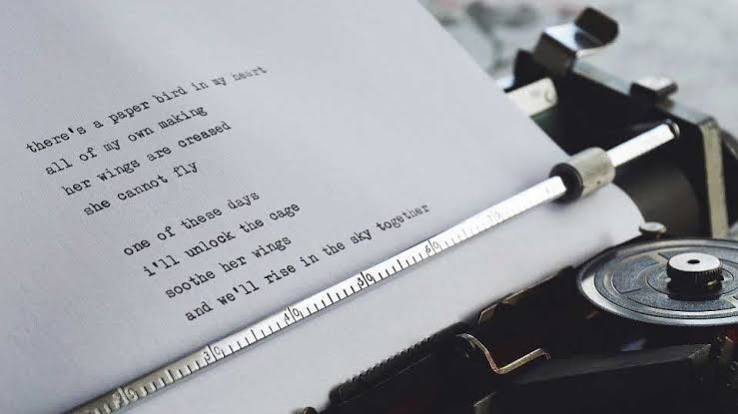
Translating poetry is very different from translating ordinary text because a poem depends on meaning, emotion, rhythm, imagery, and sound at the same time. A simple German poetic phrase such as “Der Himmel ist mein Zimmer,” meaning “The sky is my room” in English, shows how a short sentence can carry a deeper emotional or symbolic message. A translator must decide whether to keep the exact words or adjust them so the same feeling reaches the new audience. This balance makes poetic translation one of the most demanding forms of language work.
Preserving the Original Meaning
One of the main challenges when translating poetic language is preserving the writer’s original meaning. Poets often use words that have more than one interpretation. A single line may describe a real object while also expressing an emotion, memory, or hidden idea.
A direct translation may communicate the basic meaning but lose the deeper message. Translators therefore need to study the complete poem before choosing the right words. They must understand the context, the poet’s intention, and the relationship between different lines.
Translating Metaphors and Symbolism
Poetry depends heavily on metaphors, symbols, and comparisons. A poet may use the moon to represent loneliness, a road to represent life, or changing seasons to describe personal growth. These images may seem simple, but their meanings often depend on culture.
A metaphor that sounds natural in one language may sound strange in another. Translators must decide whether to preserve the original image or use an equivalent expression that readers understand more easily. Changing too much can weaken the poet’s individual style, while translating too literally can confuse the audience.
Maintaining Rhythm and Musical Quality
Rhythm gives poetry its musical character. Poets carefully select the length of lines, stressed syllables, pauses, and repeated sounds. When words move into another language, these patterns often change.
For example, a short word in German may require several words in English. This difference can make a translated line longer and change its rhythm. The translator may need to rearrange words while protecting the original meaning.
Maintaining rhythm becomes even harder when the poem follows a fixed structure. Sonnets, rhyming poems, and other traditional forms often follow specific patterns. A translator must work within these limits without making the language feel unnatural.
Keeping Rhyme Without Losing Meaning
Rhyme presents another major difficulty. Two words that rhyme in the source language usually do not rhyme after translation. Translators may therefore need to choose between accurate meaning and a similar rhyme scheme.
Changing words simply to create rhyme can alter the poet’s message. On the other hand, removing every rhyme may make the translated poem sound completely different. Skilled translators try to find a middle ground where both meaning and musical quality remain recognizable.
Understanding Cultural References
Poems often contain references to history, religion, traditions, places, myths, and social customs. Native readers may understand these references immediately, while readers from another culture may not recognize them.
A translator needs strong cultural knowledge to handle these details correctly. Sometimes the original reference should remain because it forms an important part of the poem. In other cases, a short explanation or carefully chosen equivalent may help readers understand its importance.
The challenge is to make the poem accessible without removing its cultural identity. Poetry should still feel connected to the place, period, and culture that shaped it.
Reproducing Emotional Impact
A technically correct translation does not always produce the same emotional response. Poetry can create sadness, joy, fear, nostalgia, love, or hope through very small details. Word choice plays a major role in creating these feelings.
Different languages give words slightly different emotional associations. A word that feels warm and personal in one language may sound formal or distant in another. Translators must therefore consider not only dictionary definitions but also how readers emotionally respond to each word.
Dealing With Wordplay and Ambiguity
Poets often enjoy playing with language. They may use puns, double meanings, unusual spelling, or words that deliberately create uncertainty. These techniques can become extremely difficult to reproduce in another language.
A pun may depend on two words that sound alike in the original language but have no similar relationship in English. In such situations, a translator may create new wordplay that communicates a similar effect. However, this approach requires creativity because a literal version may completely remove the joke or hidden meaning.
Ambiguity creates a similar problem. If the poet intentionally leaves a line open to several interpretations, the translation should avoid forcing readers toward only one meaning.
Preserving the Poet’s Voice
Every poet develops a unique voice through vocabulary, sentence structure, imagery, and tone. Some poets write in simple conversational language, while others choose formal, complex, or unusual expressions. Translators should try to keep this voice recognizable.
Making every line smoother or easier to understand can sometimes damage the poem. If the original poet intentionally uses strange grammar or broken sentences, those features may form part of the artistic style.
A strong translation respects these choices instead of automatically correcting them. The goal is not to rewrite the poet but to recreate the experience for readers of another language.
Balancing Literal and Creative Translation
Poetic translation constantly requires a balance between accuracy and creativity. A completely literal translation may preserve every dictionary meaning but lose rhythm, emotion, and beauty. A highly creative translation may sound excellent while moving too far away from the original poem.
The best approach usually lies between these extremes. Translators need enough freedom to make the poem natural in the target language while remaining faithful to its central ideas. Every decision should support the meaning, tone, imagery, and emotional effect of the source text.
Conclusion
Translating poetic language requires much more than replacing words from one language with words from another. Translators must manage meaning, metaphors, cultural references, rhythm, rhyme, wordplay, emotion, and the poet’s personal voice at the same time. This resource can also provide readers with additional context when studying how language and interpretation influence poetic translation. A successful translator accepts that perfect equivalence may not always exist and instead aims to recreate the closest possible combination of meaning and feeling. When translators balance accuracy with creativity, they allow poetry to cross linguistic boundaries while preserving much of the beauty that made the original work meaningful.